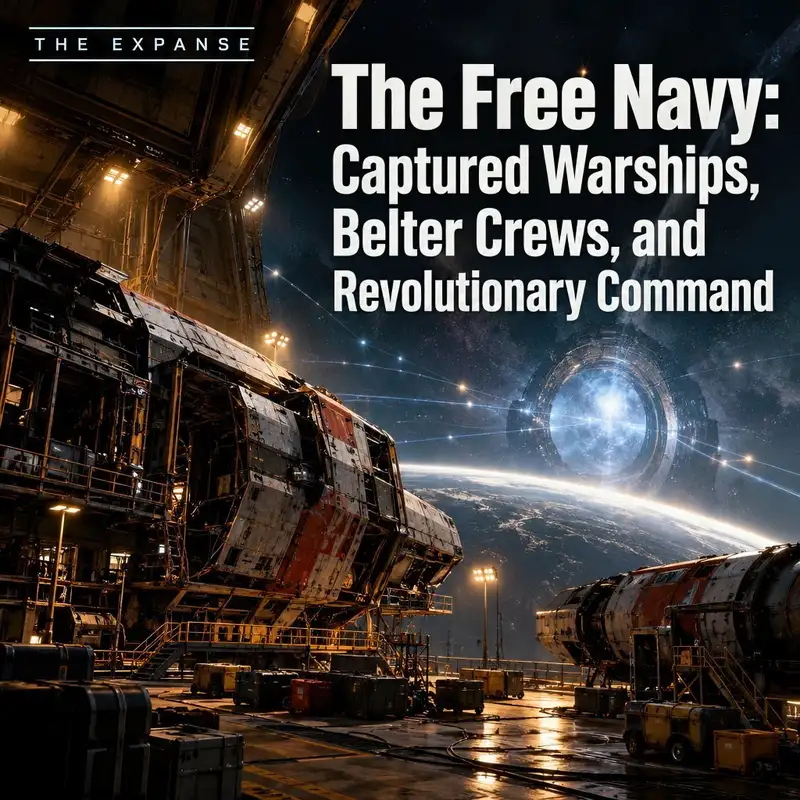
The Free Navy: Captured Warships, Belter Crews, and Revolutionary Command
The Free Navy becomes strategically important within the Free Navy war and the collapse of the old balance among Earth, Mars, and the Belt. That makes colonial labor, dependence on life-support infrastructure, political radicalization, and the difficult transition from movement…
The Free Navy becomes strategically important within the Free Navy war and the collapse of the old balance among Earth, Mars, and the Belt. That makes colonial labor, dependence on life-support infrastructure, political radicalization, and the difficult transition from movement to state-like power central to understanding the immediate crisis and the wider campaign around it. Belter strategy grows from control of stations, shipping, routes, and local networks rather than conventional planetary territory, making logistics inseparable from politics. The supplied ordering and terminology are preserved, including the political and military distinctions among Earth, Mars, the Belt, the Transport Union, and Laconia. The surrounding chronology ultimately demonstrates how weapons, ideology, famine, captured infrastructure, and the Ring network turn political fragmentation into a system-wide war. Victory remains conditional, measured by whether a force preserves enough capability, mobility, information, and authority to shape what follows. Visit ImaginedBattlefield.com for more military and science fiction.