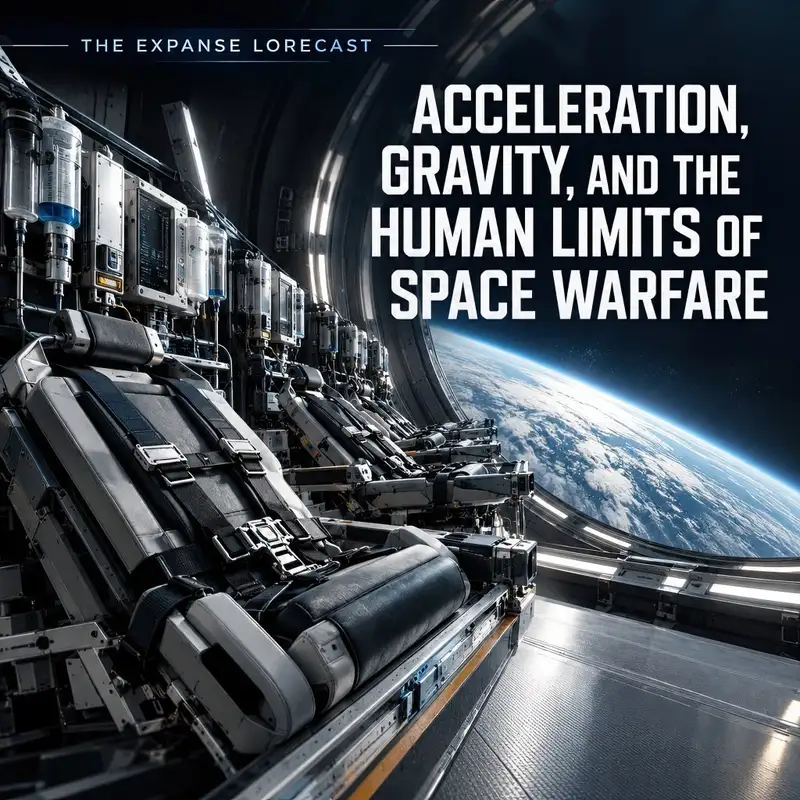
Acceleration, Gravity, and the Human Limits of Space Warfare
Viewed as military history, Acceleration, Gravity, and the Human Limits of Space Warfare belongs to the political and military order of the Sol system and the first protomolecule crisis, a setting constrained by physics as much as politics. The analysis concentrates on strategic…
Viewed as military history, Acceleration, Gravity, and the Human Limits of Space Warfare belongs to the political and military order of the Sol system and the first protomolecule crisis, a setting constrained by physics as much as politics. The analysis concentrates on strategic distance, propulsion, acceleration limits, and the way physics constrains interplanetary warfare, with attention to what leaders can know, control, sustain, and risk. The Expanse treats movement as a military problem: ships may cross enormous distances quickly by historical standards, but crews still pay for every maneuver in fuel, time, and physical stress. The episode stays within the supplied chronology and avoids unsupported continuity claims. Its position matters because the wider campaign shows how Earth, Mars, and the Belt are locked into an unstable balance shaped by strategic distance, life-support dependence, naval deterrence, and competing identities. Victory remains conditional, measured by whether a force preserves enough capability, mobility, information, and authority to shape what follows. Visit ImaginedBattlefield.com for more military and science fiction.