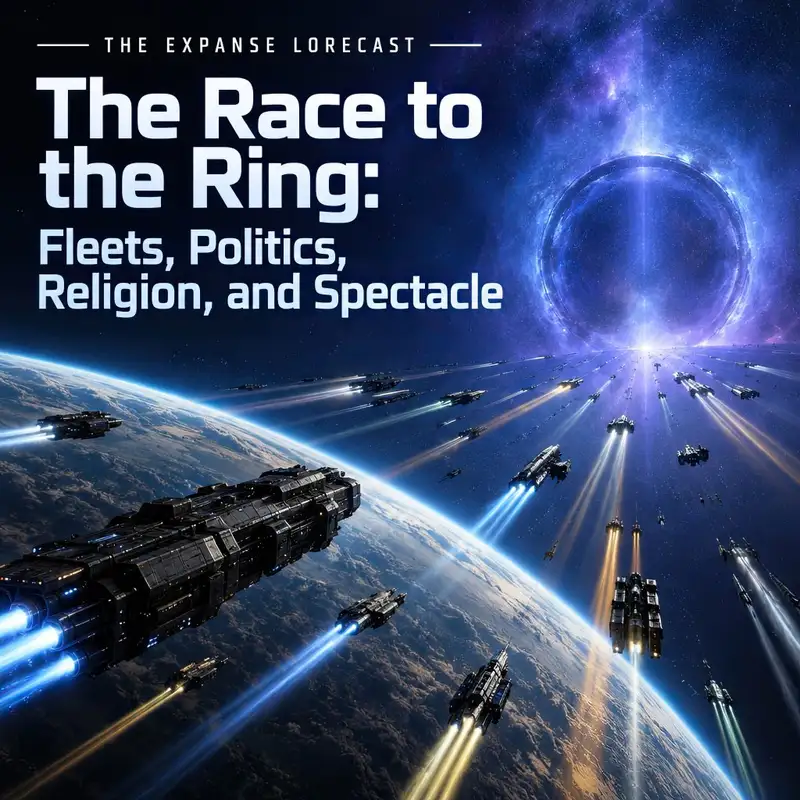
The Race to the Ring: Fleets, Politics, Religion, and Spectacle
The importance of The Race to the Ring comes from its place in the Earth–Mars conflict, the protomolecule arms race, and the opening of the Ring network, where small actions can generate system-wide consequences. At the center is strategic mobility, chokepoints, unknown alien in…
The importance of The Race to the Ring comes from its place in the Earth–Mars conflict, the protomolecule arms race, and the opening of the Ring network, where small actions can generate system-wide consequences. At the center is strategic mobility, chokepoints, unknown alien infrastructure, and the sudden expansion of humanity’s accessible battlespace, linking tactical choices to the ability of governments, fleets, or communities to continue the struggle. The Ring network rewrites strategy by making one hub the gateway to more than a thousand systems, turning transit control into a form of interstellar power. The episode stays within the supplied chronology and avoids unsupported continuity claims. Placed in sequence, the topic advances the season’s concern with how old rivalries continue even as alien technology introduces strategic problems no existing government or fleet was designed to manage. Victory remains conditional, measured by whether a force preserves enough capability, mobility, information, and authority to shape what follows. Visit ImaginedBattlefield.com for more military and science fiction.